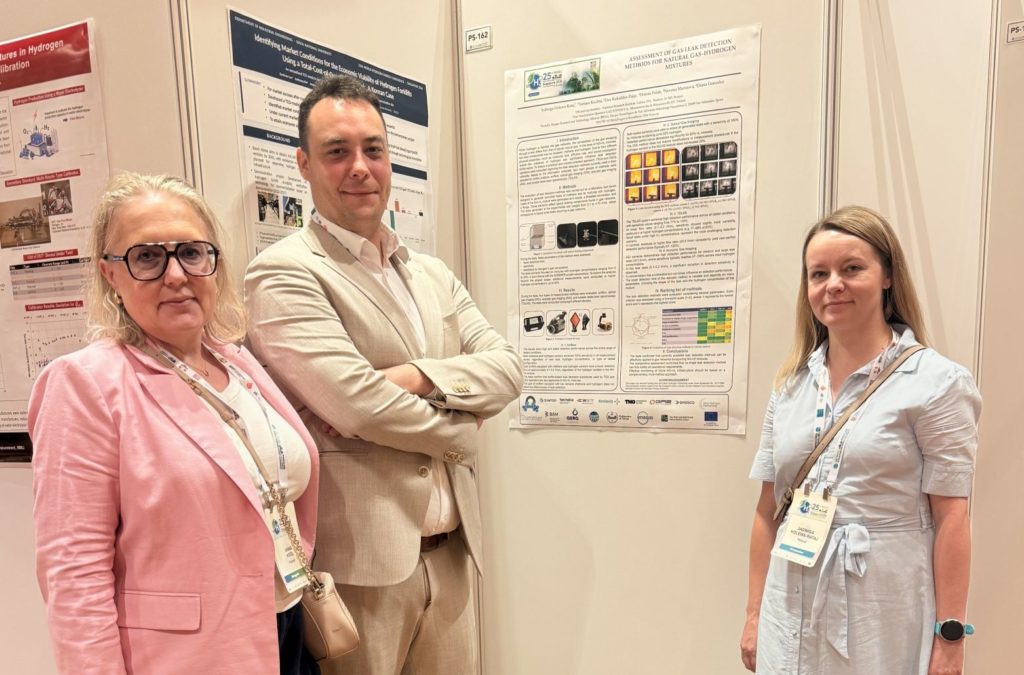
The SHIMMER project presented new research findings at the World Hydrogen Energy Conference 2026 (WHEC 2026), demonstrating that current gas leak detection methods can be successfully applied to gas networks transporting natural gas–hydrogen (NG-H₂) mixtures.
During the conference, Jadwiga Holewa Rataj, Tomasz Kuchta and Anna Król from the Polish Oil and Gas Institute -SHIMMER partner- shared the results of an experimental assessment of four leak detection methods designed to evaluate their performance in NG-H₂ environments. Their work contributes to a better understanding of how existing technologies can support the safe integration of hydrogen into gas distribution systems.
The study confirms that the leak detection methods currently used in conventional gas networks remain applicable when hydrogen is blended with natural gas. However, the results also show that no single technology is capable of fulfilling every operational requirement. Instead, effective monitoring of NG-H₂ infrastructure relies on combining different detection methods, allowing their respective strengths to complement one another and providing a more comprehensive approach to network safety.
These findings represent an important contribution to the development of hydrogen-ready gas infrastructure. As hydrogen becomes an increasingly important energy carrier, ensuring the safe operation of gas networks will be essential to supporting the energy transition. By assessing the performance of established leak detection technologies under new operating conditions, SHIMMER is helping to identify practical solutions that can facilitate the deployment of hydrogen blends while maintaining high safety standards.
SHIMMER extends its thanks to the presenters, Jadwiga Holewa Rataj, Tomasz Kuchta and Anna Król, as well as to the poster authors: Jadwiga Holewa Rataj, Tomasz Kuchta, Anna Król, Dorota Polak (Gaz-System), Nevena Marinova (TECNALIA) and Diana González (SINTEF) for their valuable contribution to this research and to the project’s ongoing efforts to advance safe and reliable hydrogen infrastructure.